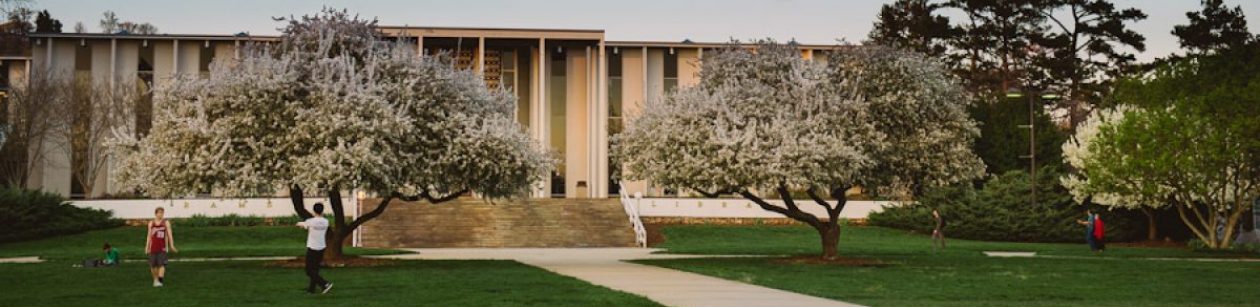
This week has seen me survive a terrible case of the flu, and struggle immensely with midterms. But despite feeling like Atlas, I have made some progress with our project. We now have a definitive time set up to interview Darin Waters, and are nearly done drafting up a list of questions to talk to him about. We originally were wanting to interview him tomorrow, but he is leading a committee on race in North Carolina tomorrow, so his schedule is very busy. Not deterred, I have also been in contact with the administrator of a facility on our campus known as the Reuter Center. This is an area where adults from the Asheville community can continue or begin their higher education without having to go through the typical college class experience. I think interviewing a student there would be incredibly interesting, as many of them have been taking classes at UNCA for years, simply enjoying the liberal arts educational process instead of focusing on trying to get a degree. I’m especially interested in hearing their opinions on UNCA’s development, and it’s move towards a more digital form of the humanities and liberal arts. A final thing I’d like to discuss, unrelated to our project, is the visit Tim Kaine, Hillary’s running mate, recently made to our campus. After having a few days to reflect upon and process everything that he said, I was left with a question posed by Senator Kaine that is very relevant to our course: Why is public higher education so exorbitantly expensive in the United States compared to other Western nations? The culture and attitude surrounding college education in the US is a far cry from the way many European nations view it. Regardless of your political views, I think we can all agree that college education in America is in need of a serious reform. Acts such as the GI Bill have tried to even out the playing field, but it still remains difficult for students to attend college without aid. In addition, the stigma against liberal arts educations and the push for more vocational fields makes schools such as ours even more important to continue the liberal arts narrative.
Monthly Archives: October 2016
The Progression of a Project
My research from the past week has kept the process of our project moving along nicely. I’ve been looking into documents concerning the IRB at UNCA, and it seems for the sake of our project, we are exempt from having to fill out any requests. Going off of that, we are preparing for our interview with Dr. Darin Waters next week, the first step in our process of meeting our timeline goals. As hypothesized in class, these deadlines are already shaky, as our original interview time has been rescheduled for next week. However, after that interview, I think I’ll feel much more confident with how the project will be formatted in the long run, as we’ll have a reference to go off of for our subsequent interviews. As for how this relates to the humanities, I feel that the opportunity to interview people in the university and the community about the history of our city and campus is definitely an example of an education fueled by the humanities. The continuing integration of the digital aspects of the humanities into our course should also factor into our interviews, especially with professors, as it seems to be the natural progression of the liberal arts education.
Sources:
Project Contract
Julia Bone, Casey Brown
October 2nd, 2016
- Long, C. Woodcox
DH 373
Project Contract
Mission:
Our mission is to create a historical narrative of the University of North Carolina at Asheville’s development. We would like to digitally map the development of the liberal arts alongside the development of our campus. Our website will function as a digital exhibit of UNC Asheville’s history and its relationship with the liberal arts. We intend to create a website that would be helpful for anyone with an academic interest in the liberal arts, or the overall history of the UNCA campus. As part of a larger project in our COPLAC course, we will exemplify the growth of a liberal arts university through our school’s unique background.
We will utilize WordPress to allow a multifaceted experience, complete with text, images, and audio. We will link a timeline through TimeLineJS onto our site to create a more interactive experience. We will pay special attention to the aspects of war and the GI Bill for their influences in the development of our campus’ history, along with the impact of tourism on the city and university.
Tools:
- We will be using WordPress, with the Twenty Fourteen layout. WordPress is easy to navigate and has all of the tools we believe are necessary to properly convey our project’s purpose.
- We will also utilize TimelineJS. Any image editing can be handled through Photoshop. TimeLineJS will be used to detail important events throughout our university’s history, as well as events that impacted liberal arts and higher education that affected our school. Link to TimeLineJS: http://timeline.knightlab.com/
- We will upload video components through YouTube and link through our website.
- We are also considering uploading images from our experiences working on the project, as well as relevant photos of our university that will add historical context. We will go to our university’s Special Collections archive to find photographs that we see suitable for our project.
- To conduct interviews, we will be using lapel microphones and potentially cameras for recording, which can be found through either our university library or the Mass Communication department.
Milestones:
- Design, and build a website using WordPress by October 11th.
- Conduct first interview with Dr. Darin Waters of the UNCA History Department by October 13th.
- Conduct interview with Gene Hyde, Special Collections archivist at UNCA, by October 21st.
- Conduct 3rd, 4th, and 5th interviews by the end of October.
- Compile interviews with timeline by November 1st.
- Finish website and add all components for project and prepare presentation for final due date.
Who will be doing what:
- We will cooperatively interview Dr. Darin Waters. Julia will interview Gene Hyde. Casey will be handling the third and fourth interview, and Julia the fifth.
- We will cooperatively design and create our WordPress website.
- Casey will be using TimeLineJS to create the timeline; Julia will research and find information that will be laid out in the timeline.
Musings on the Human Element of Digital Humanities
The liberal arts and digital humanities seem to be intrinsically connected on their most core level. While the liberal arts may encompass a more broad category, there is still a definitive emphasis placed on the humanities and the human experience. Digital humanities obviously also have a huge emphasis on the humanities, but the actual human element seems to be up for question. Human history has been profoundly, inarguably impacted by the technological breakthroughs that occurred throughout it. While it is debatable whether pre-agricultural revolution nomads had more of a genuine human interaction than subsequent farming civilizations, it seems safe to say that the emergence of widely accessible digital communications has rocked the way we understand human interaction. It seems easy to say that some aspect of the human element is lost when a class is held over Skype, or Blue Jeans, or any other kind of telecommunication. As we’re inherently social creatures, it seems that a conversation that isn’t face-to-face lacks a certain authenticity, and is somehow seen as less valid. If we were to follow this train of thought, it seems clear that the wider lens of the liberal arts seems much more preferable than losing something so hard to describe, yet crucial. However, I would argue that the digital humanities don’t deprive people of an essential part of learning, but instead, trade it for a different kind of human interaction. The way that people interact over the phone, through a letter, or through a video call is profoundly different than in person, and to not experience that form of communication is to miss out on a learning experience. That brings me back to our COPLAC course in general. Our experience of being able to participate in a digital humanities course, to me, is simply the natural evolution of a liberal arts education. Allowing students to discuss and learn about the humanities through a different outlet than traditional schooling is simply the next step in education. So rather than have the liberal arts and digital humanities be seen as two competing ideas, I believe digital humanities are just a natural extension of the liberal arts. In this vein, I believe that the work we are doing with our projects is the next step in education. Rather than compile information for a one-time use of a paper, we’re taking meaningful interactions and experiences, and synthesizing them for whoever would want to learn about the material. The active human element of having such a personal experience allows us to experience education is a way very unique to our type of class. Our liberal arts educations let us craft a project that will have much more long-lasting effects than a single grade.
